
Sunidhi Chauhan: The Voice That Rewrote Playback Rules
Sunidhi Chauhan began as a child singer and became a leading playback voice. Her songs, awards and stage work as her biography records them.
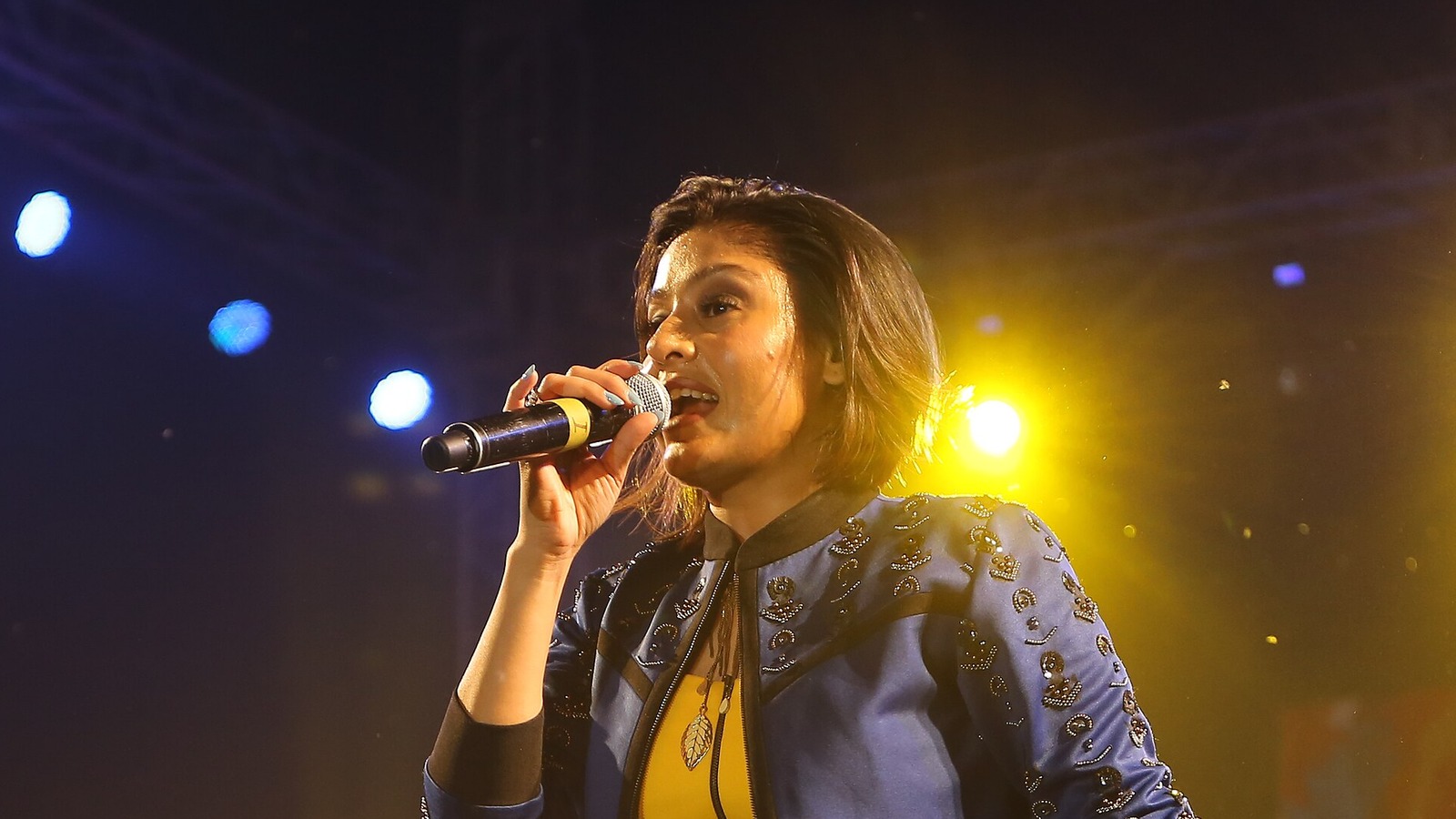
Few playback singers have sounded as at ease in a lullaby as in a dance-floor anthem. Sunidhi Chauhan has done both for nearly three decades. This piece uses her published biography to trace how a child performer from Delhi became one of the most nominated voices in Hindi film music.
A childhood on stage
According to her Wikipedia biography, Chauhan was born Nidhi Chauhan on 14 August 1983 in New Delhi. Her father, Dushyant Kumar Chauhan, is a theatre personality at the Shriram Bharatiya Kala Kendra. She began performing at competitions and local gatherings at four, and trained herself through regular riyaaz by listening to cassettes and CDs of popular songs.
She left school after finishing to pursue a singing career, saying she did not regret it. The actress Tabassum spotted her and had her sing live on the show Tabassum Hit Parade, then urged the family to move to Mumbai. The composer Kalyanji Virji Shah changed her name from Nidhi to Sunidhi, believing it a lucky name. The family faced financial difficulty settling into the city, and she became lead singer in Kalyanji's Little Wonders troupe.
The first break
In 1995 she performed with Little Wonders at the 40th Filmfare Awards, where the music director Aadesh Shrivastava heard her. At thirteen she made her film debut with "Ladki Deewani Dekho" in Shastra, alongside Udit Narayan. She also won the first singing reality show on DD National, Meri Awaz Suno, and was honoured with the Lata Mangeshkar Trophy. Realising her limitations, she took formal classical training from Gautam Mukherjee.
Sonu Nigam recommended her to the composer Sandeep Chowta, who was scoring Ram Gopal Varma's Mast (1999). Her song "Ruki Ruki Si Zindagi" won the Filmfare RD Burman Award for New Music Talent and earned a Best Female Playback Singer nomination.
Range as a signature
Her next breakthrough, "Mehboob Mere" from Fiza (2000), composed by Anu Malik, was recorded in 15 minutes, according to the biography, and she considered it the track that came to her most naturally. In the same year Vidhu Vinod Chopra wanted an innocent voice for "Bumbro" in Mission Kashmir, and said she could sound very girlish, so she sang it with a slightly broken voice for Preity Zinta's character. She credits Malik with fighting producers so that she would be accepted in romantic numbers for heroines.
That range is the thread of her career: "Dhoom Machale" from Dhoom (2004), "Kaisi Paheli" from Parineeta and "Deedar De" from Dus brought more nominations. Her first Filmfare Award came in 2006 for "Beedi Jalaile" from Omkara, and her second in 2010 for "Sheila Ki Jawani". She also recorded the title song of Aaja Nachle (2007) and marked her international singing debut in 2010 on an alternate version of Enrique Iglesias's "Heartbeat". The biography counts three Filmfare Awards and a Filmfare Award South.
Beyond the studio
Chauhan has judged several television reality shows and appeared in music videos, and she has been involved in charities and social causes. She appeared four times in the Forbes Celebrity 100 of India, from 2012 to 2015. Her songs are in several Indian languages.
A caveat on the record
The biography leans on awards and nominations, which measure industry recognition rather than why listeners return to a song. What the record does show is range: nominations for a girlish folk-flavoured song, a romantic duet and a club anthem, from one voice. It also shows how early the career began, with a film debut at thirteen and a breakthrough at sixteen.
Sources
*Cover photo: Lavnish34, Wikimedia Commons (CC BY-SA 4.0).*