Rahat Fateh Ali Khan and a Family Built on Qawwali
Rahat Fateh Ali Khan grew up in a family of qawwals and trained under his uncle Nusrat. His career, per his biography and interviews.
Rahat Fateh Ali Khan was born into a household where the family profession was qawwali, and his own account of his career starts at home. This piece draws on his Wikipedia biography, an interview in The News, a Dawn report and a London review, and corrects one claim in the biography.
A family of qawwals
According to Wikipedia, Rahat was born on 9 December 1974 in Faisalabad, Punjab, Pakistan, into a family of qawwals and classical singers. He is the son of Farrukh Fateh Ali Khan, the grandson of the qawwali singer Fateh Ali Khan and the nephew of Nusrat Fateh Ali Khan. A BBC profile calls his father "The Harmonium King" and says the family has helped shape the history of qawwali and Sufi music in the subcontinent.
In The News he said he was born into a family of qawwals whose name is synonymous with South Asian musical tradition, "so becoming a singer was a natural progression", and that joining another profession "was out of question". He described a "600-year-old family legacy".
Learning at home
He says he began singing at three under his father, and that his formal training began at seven under his uncle Nusrat. Wikipedia says he performed publicly for the first time in 1979, aged nine, on the death anniversary of his grandfather. He says he sang his first solo ghazal at a concert in Birmingham in 1985. From fifteen he was part of Nusrat's qawwali group, and he toured the United Kingdom with his uncle in 1985. He said Nusrat, who had no son, treated him as his own, and that after Nusrat died in 1997 he was made his successor.
Film and international work
He made his Bollywood playback debut with "Mann Ki Lagan" from Paap (2003), a composition by Nusrat that was originally recorded in Pakistan for an unreleased album. He worked on the soundtracks of Dead Man Walking with Eddie Vedder in a subordinate role to his uncle, The Four Feathers with James Horner, and Apocalypto, and sang "Teri Ore" in Singh Is Kinng with Shreya Ghoshal. He judged Chhote Ustaad alongside Sonu Nigam. He has appeared in five editions of Coke Studio Pakistan, including "Afreen Afreen" with Momina Mustehsan in season 9, and in MTV Unplugged India in 2016. His 2014 song "Zaroori Tha" from the album Back 2 Love was the first original non-film music video from the subcontinent to pass 100 million YouTube views, according to the biography.
The Nobel Peace Prize Concert
Wikipedia calls him the first Pakistani to perform at a Nobel Prize concert. Dawn corrected an early report to the same effect: the band Junoon had performed at the event in 2007. Rahat performed at the 2014 concert in Oslo, singing "Tumhe Dillagi" and "Mast Qalandar", and called it his most memorable concert. The concert honoured Kailash Satyarthi and Malala Yousafzai.
On stage in London
In April 2012 he toured the UK, playing Wembley Arena and the Manchester Arena. He returned to Wembley in 2014, where the London Evening Standard's reviewer wrote that he "can really do traditional Sufi qawwali singing" but that the show was "showbiz", noting around 14,000 fans.
A note on sources
The biography also covers a customs case, family disputes and other controversies. This article leaves them out, as they are not needed for his musical background. The claim of being the "first Pakistani" at the Nobel concert is not repeated.
Sources
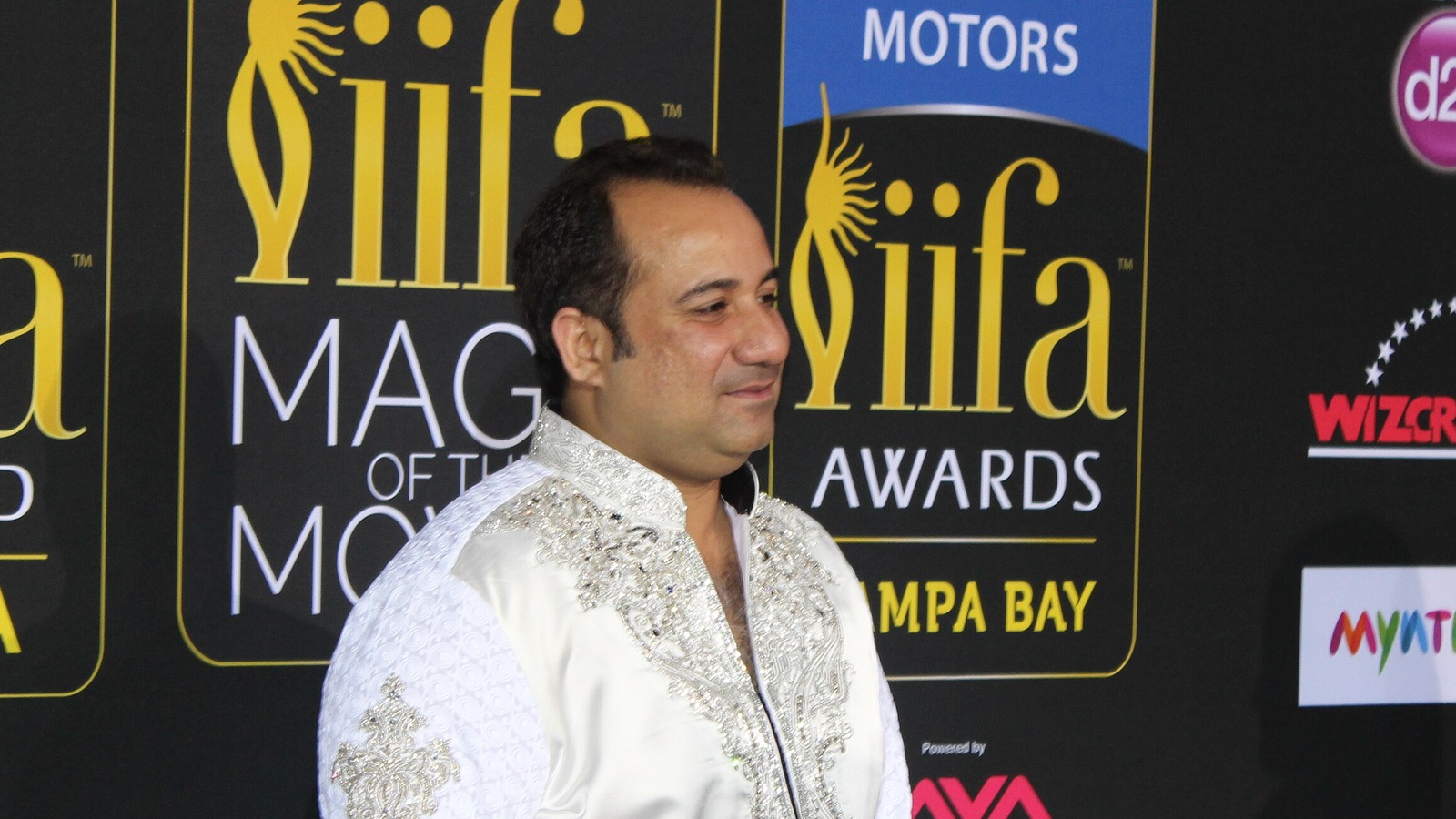
*Cover photo: Laura Lee Dooley, Wikimedia Commons (CC BY 2.0).*